Drug Abuse A Threat To Youths


Garahwa village has been shattered by a growing crisis of drug and substance abuse, alarming local authorities and community leaders. Reports indicate a significant rise in the use of illicit substances, particularly among the youth, prompting urgent calls for intervention.

In the amidst of battling against drug abuse in the country many incidents have surged by over 40% in the last year, with many young adults falling prey to substances such as marijuana and methamphetamine. Community members have expressed concerns about the impact of drug abuse on public safety, education, and local health services.

“What made us trending on posting about drug abuse is because we are witnessing that our children are taking strong stuff especially those who are leaving schools because of alcohol and it is there we are having a lot of drunkards who are under 18 years of age and we don’t want that in our community and if we catch you will fined with cattle”, said chief spokesperson James Garahwa.


In response to the crisis, local authorities are planning a community meeting next week to discuss potential solutions, including educational campaigns and drug rehabilitation initiatives. The police have also increased patrols in the area to deter drug trafficking and provide support to vulnerable individuals.

Chief Garahwa claimed that the community is known for its peaceful reputation and that it must come together as a community to fight this problem which is being caused by people who go outside the country.


“Most of the drugs came from south Africa in our communities our boys usually use what is called “sope” or “nipa” and the Ranger known as “Tumbwa” which come in bulk but other drugs are not that much used here”, said Headman Robert Garahwa.


As the situation continues to evolve, the people of Garahwa remain vigilant, determined to tackle the pervasive issue of drug abuse head-on with collaborative efforts which is in hand with the Zimbabwe Multi-sectoral Drug and substance Abuse plan(2024-2030) launched by president Emmerson Mnangagwa.

Clean energy boosts livelihoods and Agriculture in Hakwata :chipinge

BY TAKUDZWANASHE MANGONGERA


Hwakwata solar power plant created through a partnership between the United Nations Development Programme (UNDP), the Ministry of Land, Agriculture, Fisheries, and Rural Development and the Hakwata community has significantly transformed local livelihoods. The initiative, aimed at promoting sustainable energy and agricultural practices, is proving to be a catalyst for economic and social development.


“This initiative was seen as a faster method to bring electricity to the rural community. This project started in 2022 but we started using our plant last year in May”, said Energy Committee Managing Director Abition Muziboyi.


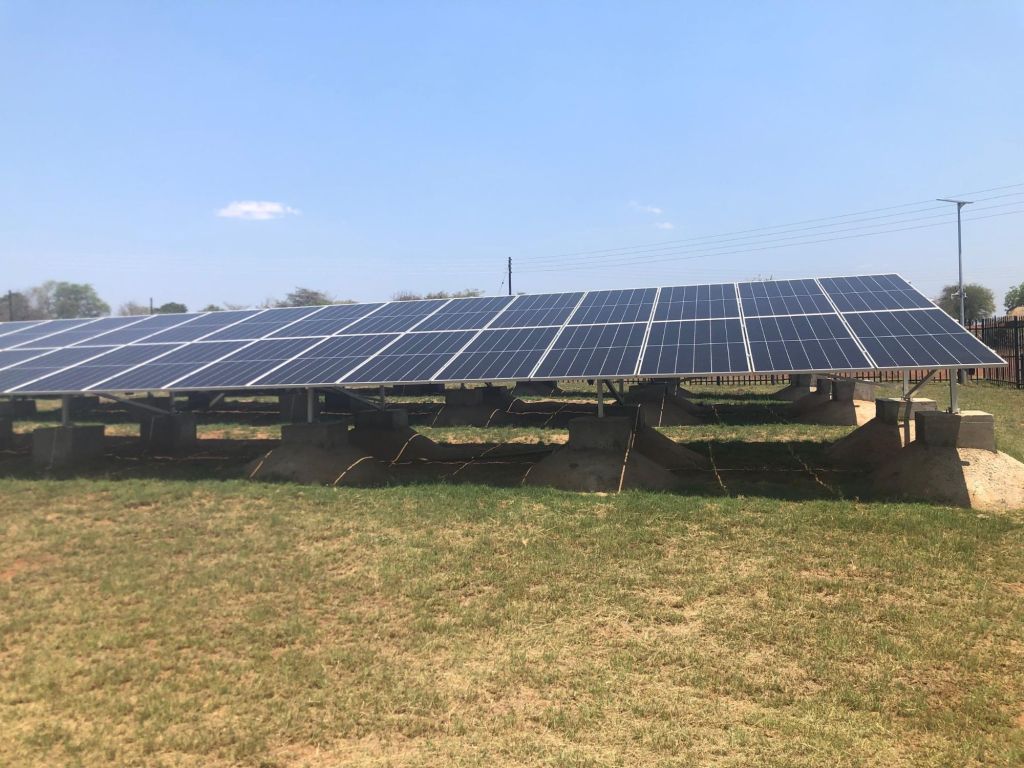
The solar plant has 416 solars and 48 batteries which has 87 household connected, 18 shops, the community clinic and school which are benefitting from the programme. The solar mini grid is 108 designed to provide clean energy to the Hakwata community. By replacing reliance on traditional fossil fuels, the facility has helped reduce energy costs for families and local businesses, allowing for greater investment in community development.


“There are great changes as our children did know television there are now able to read even in businesses are growing, we can sell for long hours up to 12 or 1 Am as compared to before we had the plant, we would close our shops at six o’clock because there was darkness but now everything is working perfectly”, said Muziboyi.


UNDP has also provided training programs for local residents, focusing on sustainable agricultural practices and the efficient use of solar energy. These workshops have empowered community members to adopt innovative farming techniques, enhancing food security in the region.


Local farmers have reported increased productivity as a direct result of the solar energy initiative. With access to reliable electricity, many have been able to implement modern irrigation systems and improve their storage facilities, significantly reducing post-harvest losses.

“We are learning how to use solar energy to power our tools and equipment, which has made our work easier and more productive,” said Agritex officer Ranganai Gwenzi.

In addition, the solar plant has created several job opportunities within the community. Positions have been established in maintenance and operations, providing stable employment for local residents. The initiative is expected to further stimulate local economic growth as businesses expand due to increased access to energy.

Shava tasks universities with implementing innovative Education model

Minister of Higher Education has commissioned new council members for two universities, tasking them with implementing the national Education 5.0 model.

Minister Frederick Shava officiated the ceremony for Marondera University of Agricultural Sciences and Technology and Great Zimbabwe University on October 29, 2025. He outlined their critical governance role, stating council members must evolve from passive overseers to active stewards.

Shava assured Zimbabweans tha it’s their duty to champion and monitor the implementation of the Ministry’s mandate, particularly the Heritage-Based Education 5.0, which adds innovation and industrialization to the traditional university mandates.

“You are expected to exercise fiduciary duty with prudence and diligence to uphold and promote the highest standards of ethical conduct.”

Permanent sec prof Fanuel Tagwira support the strategic direction highlighting the council’s pivotal role for  the modernization industrialization of Zimbabwe, Education 5.0.

“As Council, you have the main responsibility to oversee the implementation of Education 5.0 in your respective universities, over and above the normal fiduciary responsibility, ” he said.

Appreciating the council Tangwira urged the council to work collaboratively, leveraging diverse skills and expertise which willenhance decision-making and accountability.

Zvishavane’s water woes

Zvishavane residents are battling with the town council due to water crisis which has left thousands grappling with severe shortages, prompting urgent calls for action from local authorities and community leaders.


Residents of Zvishavane are forced to queue for hours at the few remaining boreholes that are still functioning. Women and children carry heavy containers, waiting patiently for their turn to fill up. The water is often dirty and contaminated, but it is the only water that is available.

Water crisis in Zvishavane is having a devastating impact on the community. People are getting sick from drinking contaminated water. Children are missing school because they have to help their parents fetch water. And businesses are closing down because they cannot operate without water.


“We are suffering from water shortage as disease likes cholera are spreading because people are using the toilet until it is fully overloaded even after that some are using the bush which contaminate the environment leading to sickness especially to children,”said Mandava resident Shingirirai Jenjekwa.

It’s not for the first time Zvishavane residence has faced the crisis it has been there for quite some time and some of the borehole are not working.

“We are desperate for water. Our children are getting sick, and we cannot afford to buy bottled water. The government needs to do something soon, or people are going to die,” said Martha Magombo Eastlea resident.


The town council  assured that the issue will be resolved as soon as possible as they are doing thier best to fix the problem.

The impact of sports in Zimbabwe

First and foremost,  sports provide a fun and engaging way to get moving.sports is a source of entertainment in various African communities for instance moslty people enjoy playing soccer in streets just for fun. Sports offer a wide range of options for staying active and healthy, whether it’s playing pick-up games with friends, participating in organized sports leagues, or simply watching soccer in televisions and listening from radios.

In addition, sports promote physical health, sports foster social connections and encourage community building. Whether playing on a team, attending sporting events, or simply discussing sports with friends and colleagues, athletics provide a common ground for Africa communities to come together and connect over shared interests. This social aspect of sports can build stronger communities and promote social cohesion for instance in Beitbridge they are several sports tournaments which ensure and encourage community building for instance the mayor “s marathons held annually in Beitbridge, it helps people clean their communities, town and also engage in socialising participating in the sport event. Thereofre all these shows that sports fosters social connection and ensure community building.

Sports also play a significant role in promoting cultural values and ideals. Many sports are deeply embedded in particular societies or regions’ cultures and can help reinforce cultural traditions and beliefs. For example, football is deeply ingrained in African culture and reflects many values and ideals associated with African communities , such as competitiveness, perseverance, and teamwork, for example several governments invested in the Caf federation  to promote diversity.

Beyond the boundaries of the playing fields, the Cup of Nations has been a conduit for the articulation of cultural values and ideas,showing national identity, many independent African governments invested considerable economic and political capital into national football teams in order to elicit pride and build unity among their diverse. Local In the Beitbridge community many people go out watch high school tournament such sikwari makhapatha tournament where Zezani high, siyoka, maliluwa and kwalu secondary school take part in this tournament bringing people from different tribes sothos, venda and many more.
Sports have long been an integral part of human culture, shaping our society in various way, promoting physical health and wellness to fostering social connections and promoting cultural values, athletics profoundly impact various  lives in the Africa communities.

Sports can also be a powerful tool for promoting social change and raising awareness of important issues. Athletes and sports organizations have used their platforms to advocate for various social causes,. By raising awareness of these issues and promoting positive change, sports can significantly impact society as a whole, for instance in Beitbridge local west communities, primary schools such as Majoni, Masungane, madzivhe, participate in a charity tournament called mapula sponsored by Kenny and ngambeni. The charity tournament awards prizes to winners and participates such as football kits, netball kits, trophy , academic facilities. The tournament promotes social change in the Beitbridge west community and also raise awareness to young children, hence all these shows that sports have impact in social life change in various African communities.

Sport has been a source of income to across Africa and the globe at whole, for instance many people from local societies goes to play as far as Europe because it changes and brings good living standards amongst African communities, for instance Marshal munetsi who plays as legue 1 in France, Marshal always do charity donations to various people in needs and opharnages to uplift the living standards of those who are in need and aslo to push his own living standards as  a talent young Zimbabwe who comes from rural societies. Therefore all this shows the biggest impacts that sports have in the African societies at whole and even in the world.

Moreso, sports in Africa has been a way displaying various talents in various African communities for instance athlects such as Casper semenya of south Africa, the Zimbabwe international Bruce Grobller former Liverpool goal keeper, all of this have displayed the talents from the African societies hence sport has been one of the ways of displaying various talents in the African society and enjoying who they are as Africans.

In nutshell , sports can be a source of inspiration and motivation for individuals from all walks of life as well as a source of entertainment hence sports have an impact in various African communities and developments.

Secrets of mushikashika

Zimbabwe’s urban centers have witnessed a transport revolution driven by the ever-popular mushikashika motorcycle taxis. They have become an integral part of daily life, dashing through the busy streets, offering affordable transportation options for Zimbabweans while fostering entrepreneurship.

Mushikashika, meaning “hurry hurry” in the local Shona language, refers to a rapidly growing informal sector of public transport in Zimbabwe. These motorcycle taxis have rapidly gained popularity due to their speed, convenience, and affordable fares, becoming the go to mode of transportation for thousands of daily commuters across the country.

“Mushikashika unobatsira kuti tikasike kusvika kwese kwatoda nenguva” said resident of Zvishavane Nyasha Jenjekwa.

The rise of the mushikashika motorcycle taxis can be attributed to several factors, including the scarcity and unreliability of formal public transportation services, particularly in the wake of economic turbulence. With limited options, many Zimbabweans have turned to these nimble motorcycles to commute, especially in major cities like Harare, Bulawayo, and Mutare.

“Tokwanisa kuchengeta muri nekuwana mari yema school fees nekuda kwemushikashika”,said mushikashika driver.

What makes mushikashika unique is the entrepreneurial opportunity it provides to young men who own and operate these motorcycles. With a minimal initial investment, these individuals purchase motorcycles and venture into the informal transport sector. They navigate the streets of Zimbabwe, picking up passengers, earning daily wages, and ultimately supporting themselves and their families.

These motorcycle taxis has gain market by offering convenience and quick transportation, maneuvering through heavy traffic with ease. Passengers can expect faster travel times compared to traditional forms of public transport, making mushikashika an attractive choice for commuters seeking efficiency.

For years, Zimbabwe is struggling with a persistent unemployment crisis, leaving many young people without viable job opportunities. However, the uptake of mushikashika has provided a lifeline, allowing them to become self-employed and generate income. Moreover, the surge in the motorcycle taxi has created a ripple effect, spurring the growth of small businesses that cater to these drivers, such as mechanics, spare parts dealers, and fuel retailers.

Design a site like this with WordPress.com
Get started